Public Health is Everywhere: Why We Need to Tell Better Stories This Public Health Week
By Alexandra Piatkowski
It is Canadian Public Health Week in Canada and National Public Health Week (NPHW) in the US, and the theme for NPHW 2026 is "Ready. Set. Action!" (Canadian Public Health Association (CPHA)American Public Health Association). It is a call to look back at the progress we have made and, more importantly, to look forward at the steps needed for an even healthier future. But for many of us working in the field, there is a recurring obstacle that stands in the way of that "Action": the seeming invisibility of our work.
If you have ever been at a family dinner or a networking event and been asked, "So, what do you actually do?" you know the struggle. You might start talking about social determinants of health, epidemiology, or policy frameworks, only to see the other person’s eyes glaze over.
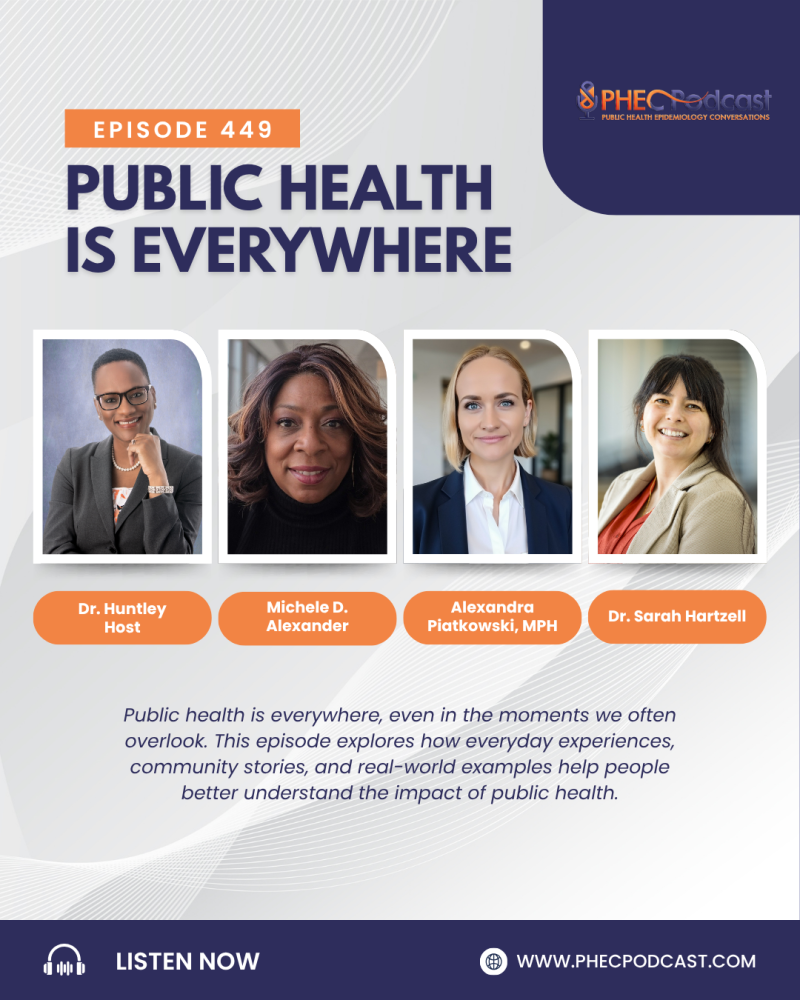
I recently had the pleasure of discussing this exact challenge on the Public Health Epidemiology Conversations (PHEC) Podcast, Episode #449: "Public Health Is Everywhere." Hosted by Charlotte Hughes Huntley, PhD, MPH, I joined fellow experts Michele Alexander and Sarah Hartzell, PhD for a roundtable conversation about why public health is so hard to define: and why storytelling is the most powerful tool we have to change that.
The Paradox of the Invisible Win
One of the core themes of our conversation was the idea that public health works best when it is invisible. When prevention is successful, nothing happens. There is no dramatic news footage of the heart attack that didn't occur because of a smoking cessation programme. There are no headlines about the outbreak that was contained before the first hospitalization.
Dr. Huntley pointed out that the public often only notices us during a crisis. But the reality is that public health is baked into the infrastructure of our daily lives.
Take the "rumble strips" on the edge of a highway. You know that vibrating sound your car makes when you veer too far to the right? That isn't just a road feature; it is a public health intervention designed to prevent drowsy or distracted driving accidents. Think about the orange cones around a pothole or the seatbelt laws we follow instinctively. These are not just safety "rules": they are the tangible results of data-driven public health initiatives.
The problem is that when we don’t name these things as public health, the field loses its connection to the community. If people don't see the value, they don’t see the need for funding, support, or a robust workforce. During Canadian Public Health Week in Canada and National Public Health Week in the US, we need to make the invisible visible.

Telling Stories Instead of Reciting Definitions
During the podcast, Dr. Huntley challenged us to think about the stories we use to help people understand our field. We realized that definitions don't move people: moments do.
When we talk about "workforce development," it can feel abstract. But when Michele Alexander shared the story of a woman at a mental health clinic who hoped to earn $40,000 and ended up making six figures, buying a home, and changing the trajectory of her family’s life, that is public health. When Sarah Hartzell, PhD talked about high school students realizing that being the person their friends "vent" to is actually a career path in behavioural health, that is public health.
At Piat Public Health, we believe that data is the foundation, but storytelling is the bridge. Whether we are conducting Community Needs Assessments or facilitating Strategic Planning, our goal is to help organizations translate complex data into clear, actionable narratives that resonate with stakeholders and the community alike.
Case Study in Visibility: Loneliness and the Toronto Council on Aging
In my own work, I often focus on an issue that is frequently overlooked but has massive public health implications: loneliness.
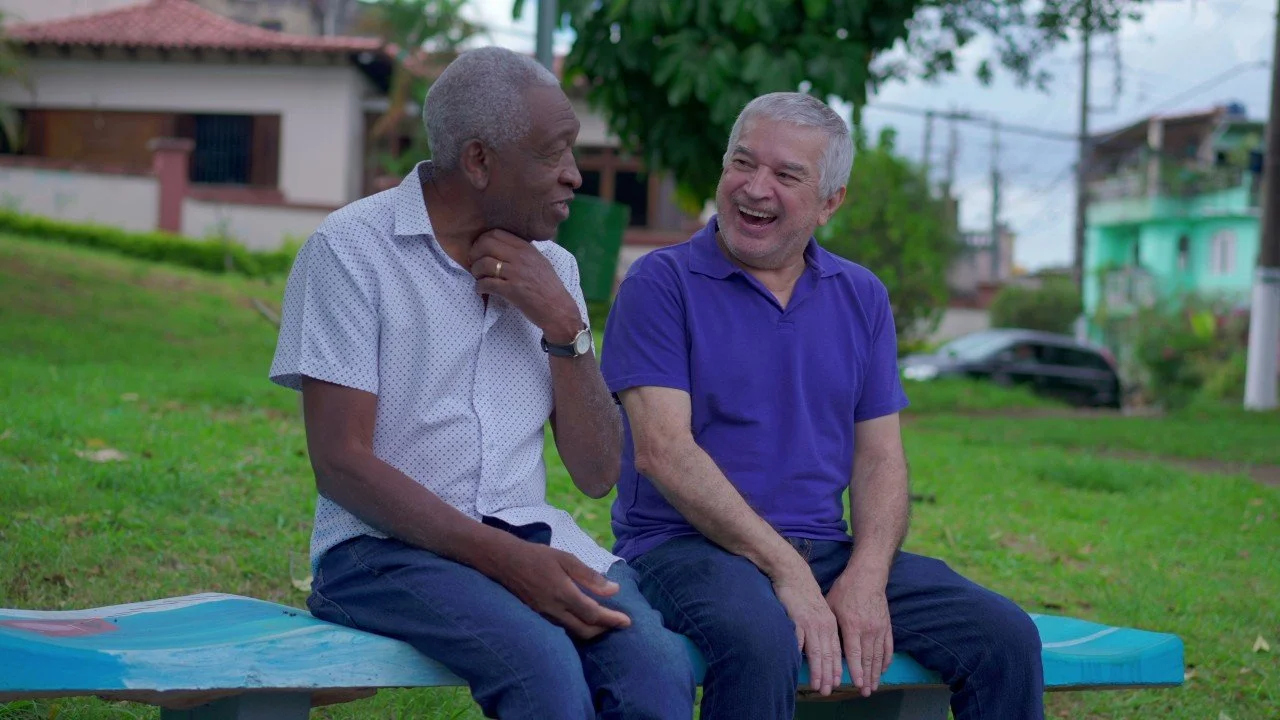
Working with the Toronto Council on Aging I have seen firsthand how senior isolation has evolved into a full-scale public health crisis. Loneliness is not just a "sad feeling"; it is a clinical risk factor for cognitive decline, cardiovascular disease, and premature mortality.
Because loneliness is "invisible," it often doesn't receive the same level of intervention as infectious diseases. However, by framing connection as a public health necessity, we can implement evidence-informed responses: like community contribution opportunities and intergenerational programming: that treat social health with the same urgency as physical health. This is a prime example of why we must tell better stories. We aren't just "organizing events for seniors"; we are mitigating a chronic health risk that impacts the entire healthcare system.

Public Health is Not Just for Emergencies
One of the most important points we touched on during the PHEC podcast was the "post-pandemic" fatigue many are feeling. While the COVID-19 pandemic brought public health to the forefront of the global conversation, it also created a false narrative that our work is only relevant during a state of emergency.
As I mentioned during the episode: "It's not just important in an emergency. It's an important thing all the time, so we can be prepared for the next emergency and address all the other areas of public health that never go away."
If we wait for an emergency to explain our value, we have already lost. We need to be talking about behavioural health workforce gaps, environmental conditions, and health equity every single day. We respect your privacy, and we respect the intelligence of our communities: they want to be part of the solution, but they need to understand the "why" behind the "what."
How Piat Public Health Helps You Tell the Story
At Piat Public Health, our role is to act as the "translators." We work with healthcare and social impact organizations to ensure that their "invisible" wins are captured, measured, and shared.
We help our clients move from "Ready" to "Action" through:
Community Engagement: Avoiding the common mistakes in community engagement to build genuine trust.
Comprehensive Data Analytics: Turning raw numbers into stories that justify funding and support.
Strategic Frameworks: Ensuring that equity is not just a buzzword, but a core component of your long-term roadmap.
Public health is happening in the rumbles of the highway, in the senior centres of Toronto, and in the rural clinics of Nevada. It is everywhere. Our job during Public Health Week is to make sure everyone else knows it, too.
Join the Conversation
During Canadian Public Health Week in Canada and National Public Health Week in the US, I encourage you to think about your own public health "elevator pitch." Instead of reaching for a textbook definition, reach for a story. What is one thing you have worked on that made a community safer, even if no one noticed?
If you are an organization looking to better articulate your impact and center equity in your next phase of growth, we are here to help. Thank you for the work you do to keep our communities healthy and thriving: even when it's not readily visible to everyone.
Ready to take the next step in your public health journey? Join our mailing list to stay updated on the latest trends in epidemiology, project management, and community health. We respect your privacy and will only send you the most relevant insights.
Thank you!
Did you catch the podcast? Listen to Episode #449 of the Public Health Epidemiology Conversations (PHEC) Podcast on Apple Podcasts or Spotify to hear the full conversation with Alexandra Piatkowski, Michele Alexander, and Dr. Sarah Hartzell.